 By admin
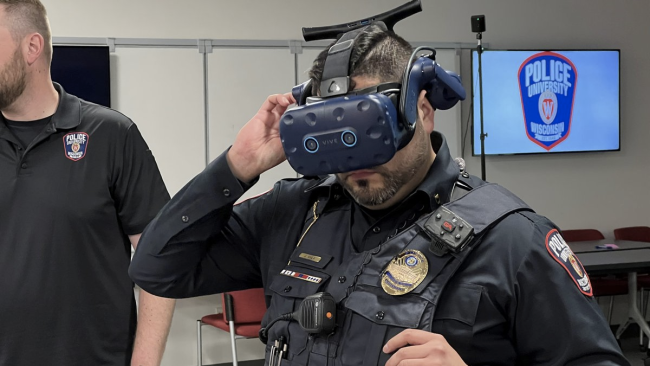
Police officers rarely know what to expect when responding to an incident. A routine traffic stop can quickly become a tense confrontation, a public disturbance may require immediate intervention, and a conversation with a distressed individual can demand patience, empathy, and careful judgment. In these situations, officers must assess what is happening, communicate clearly, and make sound decisions under pressure. There is often little time to think through every possible outcome.
Preparing officers for such unpredictable encounters requires more than classroom instruction and physical drills. This is where a police academy VR training simulator can make a meaningful difference. By combining immersive technology with realistic, interactive scenarios, virtual reality (VR) allows trainees to practice responding to challenging situations in a controlled environment. They can develop practical skills, test their judgment, and learn from their mistakes without exposing themselves or others to the risks associated with certain live training exercises.
Why Police academies are adopting VR training simulators
Traditional law enforcement training relies on several methods, including classroom lessons, physical exercises, role-playing activities, and field simulations. Although these approaches remain valuable, organizing realistic exercises can require considerable time, equipment, personnel, and suitable training locations.
A police academy VR training simulator offers another way to prepare officers for situations they may encounter on duty. Using virtual environments, trainees can participate in simulated traffic stops, public disturbances, emergency responses, and potentially dangerous encounters. Each scenario presents its own challenges, requiring officers to observe their surroundings, communicate effectively, and select an appropriate response.
Modern policing involves more than following established procedures. Officers regularly interact with people experiencing fear, confusion, anger, emotional distress, or other difficult circumstances. Every encounter requires an assessment of the available information, the individual’s behavior, and the potential risks involved.
Classroom instruction can explain the principles behind effective policing, but understanding a procedure is not the same as applying it during a stressful encounter. VR helps bridge this gap by placing trainees in interactive situations where their decisions influence how events unfold. For example, an officer might enter a virtual environment where a person is behaving unpredictably. The trainee must evaluate the situation, communicate calmly, identify potential risks, and decide whether the circumstances require further intervention. These exercises encourage officers to apply their knowledge instead of simply memorizing procedures. With regular practice, trainees can become more familiar with complex situations and develop greater confidence in their ability to respond appropriately.
Effective policing requires not only tactical knowledge but also an understanding of the people officers serve. Individuals experiencing mental health challenges, sensory overload, or communication difficulties may respond differently during stressful encounters. Without sufficient awareness, officers may misinterpret certain behaviors and respond in ways that unnecessarily escalate a situation.
A police academy VR training simulator can help address this challenge by allowing trainees to experience carefully designed scenarios from different perspectives. For instance, a simulation may demonstrate how a noisy, crowded environment could affect someone with autism or how a person experiencing psychological distress might perceive an interaction with law enforcement. These experiences can encourage officers to consider how their tone of voice, body language, surroundings, and communication style affect others. They may also help trainees recognize the importance of patience, clear instructions, active listening, and respectful communication.